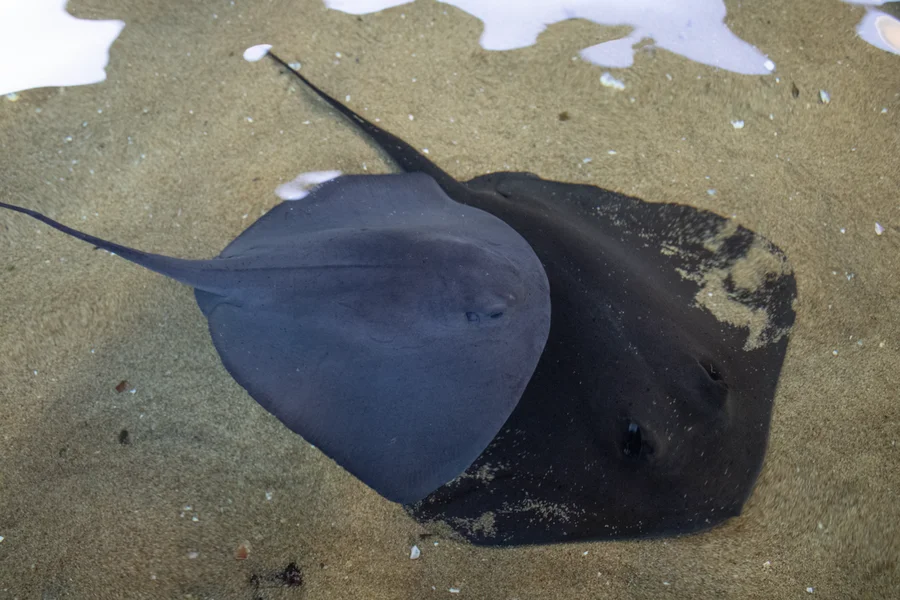
Stingray
Stingray
Dasyatidae
CommonDasyatidaeVenomous spines
ID points
- Flat disc- or diamond-shaped body, lying buried in the sand
- Long whip-like tail with a venomous spine at its base
- Eyes on the upper surface, with the spiracles right behind them
Basics
- Family
- Dasyatidae
- Length
- 40–150 cm
- Depth
- 0-60 m
- Regions
- Indo-Pacific reefs · Caribbean & W. Atlantic
- Distribution
- Tropical coral reefs and sandy bottoms worldwide
- Habitat
- Sandy bottoms around shallow reefs
- Diet
- Molluscs, crustaceans, small fish
Easily confused with
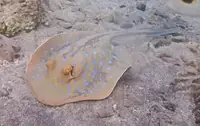 Ribbontail RayRound disc-shaped body with thin soft edges
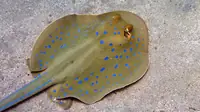 Blue-spotted Ribbontail RayRings of vivid electric blue spots on a yellow-brown ground
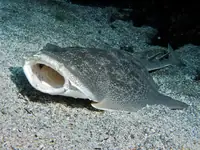 Angel SharkFlattened like a ray, but the gill slits open on the sides of the body
Fun fact
The bluespotted ray has a rounded disc scattered with bright blue spots, which makes it one of the easiest rays to recognise on an Indo-Pacific reef. The venomous barb in its tail is for defence only. Its eyes sit on top of the body and its mouth and gill slits underneath, so it draws water in through the spiracles behind the eyes and passes it down over the gills, letting it breathe while resting on the sand.
Open in the field guide - stacking filters and ID training >